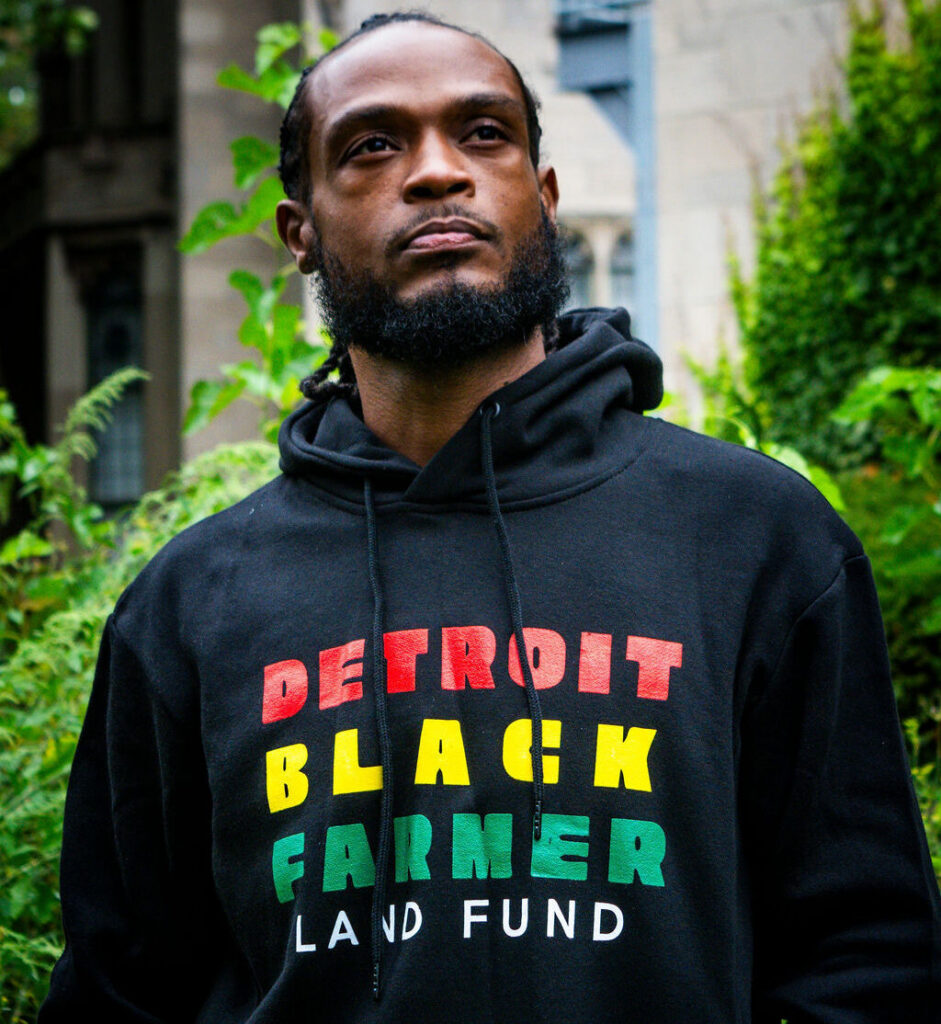
I grew up in Detroit. I learned to garden here. I became a Black farmer here—working with the Detroit Black Farmer Land Fund to help growers like me access land in a city where Black land ownership had been systematically stripped away. And I became a community development lender here, working to bring capital to the neighborhoods that banks had abandoned.
I have seen what dispossession looks like. It looks like tax foreclosure auctions that take homes from families who have lived on the same block for generations. It looks like the Land Bank selling vacant lots to the highest bidder while community groups wait in line. It looks like speculators buying up land, sitting on it, and waiting for the value to rise—while the people who made that land valuable can no longer afford to stay.
This is not accidental. It is the result of a century of policy decisions—redlining, urban renewal, predatory lending, tax foreclosures—that have extracted wealth from Black and working-class Detroiters and concentrated it in the hands of a few. And it is the same story happening in cities across the world, from Brazil to South Africa to the Philippines, where land reform movements have fought for decades to return land to the people who work it.
The struggle is global, but the tools must be local. And in Detroit, the community land trust is one of the most powerful tools we have.
A community land trust (CLT) is a nonprofit organization that holds land in trust for the benefit of a community. The CLT owns the land; residents own the buildings on top of it through a long-term ground lease. This structure permanently removes land from the speculative market, keeping homes affordable for generations. It gives people the security of ownership—the ability to build equity, pass wealth to their children, and have a say in how their community develops—without the threat of displacement. It is, in its essence, a legal tool for land reform.
In Detroit, CLTs are still new. There is no state enabling statute, no favorable tax treatment, and the relationship with the Detroit Land Bank Authority is still being negotiated. But there is momentum. The Detroit CLT movement is growing—operators like North Corktown CLT, Dream of Detroit, Freedom Dreams, Common Grounds CLT, and others are building projects, sharing resources, and pushing for policy change. I have had the privilege of convening some of these operators, and I have seen the power of what happens when we work together: pooled knowledge, shared infrastructure, and a collective voice that can negotiate with the Land Bank, the city, and the state.
There is also a deeper history to draw on. In Collective Courage, Jessica Gordon Nembhard documents how Black communities have always used cooperative economics—land trusts, mutual aid societies, burial funds, credit unions—to survive and resist. The Federation of Southern Cooperatives/Land Assistance Fund, formed in the civil rights era to help Black farmers keep their land, is a model for what a member-led, cooperative land-holding entity can achieve. We are not inventing something new; we are remembering something old.
The work ahead is hard. We need to build administrative capacity, pool resources, and create structures that can outlast any single leader or organization. We need to advocate for a state CLT enabling statute and ground-lease tax treatment so that CLTs can operate on equal footing with other land-holding entities. We need to build relationships with the Land Bank that recognize CLTs not as competitors for land, but as partners in creating permanently affordable, community-owned housing.
Most of all, we need to remember that land is not just a commodity. It is a source of life, of culture, of community. It is where our gardens grow and our children play. It is where our history lives and our future is built.
For Black Detroiters, for working-class Detroiters, for everyone who has been told that this city is not for them—the community land trust is a way to say: this land belongs to us. It always has. And we are going to build on it, together.